Carlton Morris
TactiQ Score, per-90 performance stats, and multi-season form — with direct routes into compare and rankings.
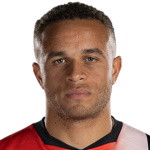
A mid-tier Premier League striker sitting at 63.06 on the FQ scale — solidly in the "adequate starter" band with clear gaps remaining. Across 38 matches and 2,867 minutes this season, they are producing 0.35 goals per 90 and 0.13 assists per 90, output that meets positional baseline without exceeding it. The absence of all dimensional sub-scores (finishing, creation, progression) limits deeper profiling, but the overall signal is reliable given 91% data completeness and a confidence score of 0.73.
With all six sub-scores null, the FQ score of 63.06 is driven entirely by aggregate per-90 output — 0.35 goals, 0.13 assists, and 0.69 key passes per 90 — which collectively land in mid-tier territory without any elite dimension pulling the score higher. The absence of finishing efficiency data (conversion rate, xG performance) means the score reflects volume contribution rather than quality-adjusted production.
Form score of 64.66 sits just 1.6 points above the FQ score of 63.06 — within the ±5 stable band, indicating no meaningful momentum in either direction. Trajectory is flat rather than improving, despite the risk agent's marginal upward read.
Aubameyang (62.88) sits at nearly the same FQ level, reflecting a similarly mid-tier aggregate output at this stage of his career; the key difference is Aubameyang carries a known finishing profile from prior seasons, whereas this player's dimensional strengths remain unconfirmed.
Top 50 players by TactiQ Score — filter by position, form, and confidence.
TactiQ Score, form, confidence, and season stats compared side by side — instantly.
Every TactiQ Score is deterministic and traceable. Read the full methodology behind the numbers.