Deniz Undav
TactiQ Score, per-90 performance stats, and multi-season form — with direct routes into compare and rankings.
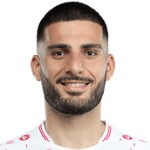
A Bundesliga striker sitting at a TQ Score of 70.8 — good, consistent above-baseline production but not yet in elite territory. The most distinctive data point is a 0.81 goals per 90, which is a strong volume rate for the role, complemented by 1.62 key passes per 90 that signals involvement beyond pure finishing. Across 26 matches and 2,001 minutes, the output has been steady rather than spectacular.
The TQ Score of 70.8 is driven primarily by consistent goal and chance-creation volume — 0.81 goals per 90 and 1.62 key passes per 90 are both above typical striker baselines. The absence of granular sub-scores (finishing, creation, progression all null) prevents a more precise breakdown, but the high data confidence of 0.84 means the headline figure is reliable.
Form score of 72.34 sits just 1.54 points above the TQ Score of 70.8 — well within the ±5 stable band. There is no meaningful upward or downward trend; this is a player producing at a consistent, predictable level with no signs of acceleration or decline.
The closest comparable at a TQ Score of 74.31, similarly profile as a high-involvement striker; Da Cunha scores 3.5 points higher, suggesting a slightly more complete or efficient output profile.
Top 50 players by TactiQ Score — filter by position, form, and confidence.
TactiQ Score, form, confidence, and season stats compared side by side — instantly.
Every TactiQ Score is deterministic and traceable. Read the full methodology behind the numbers.